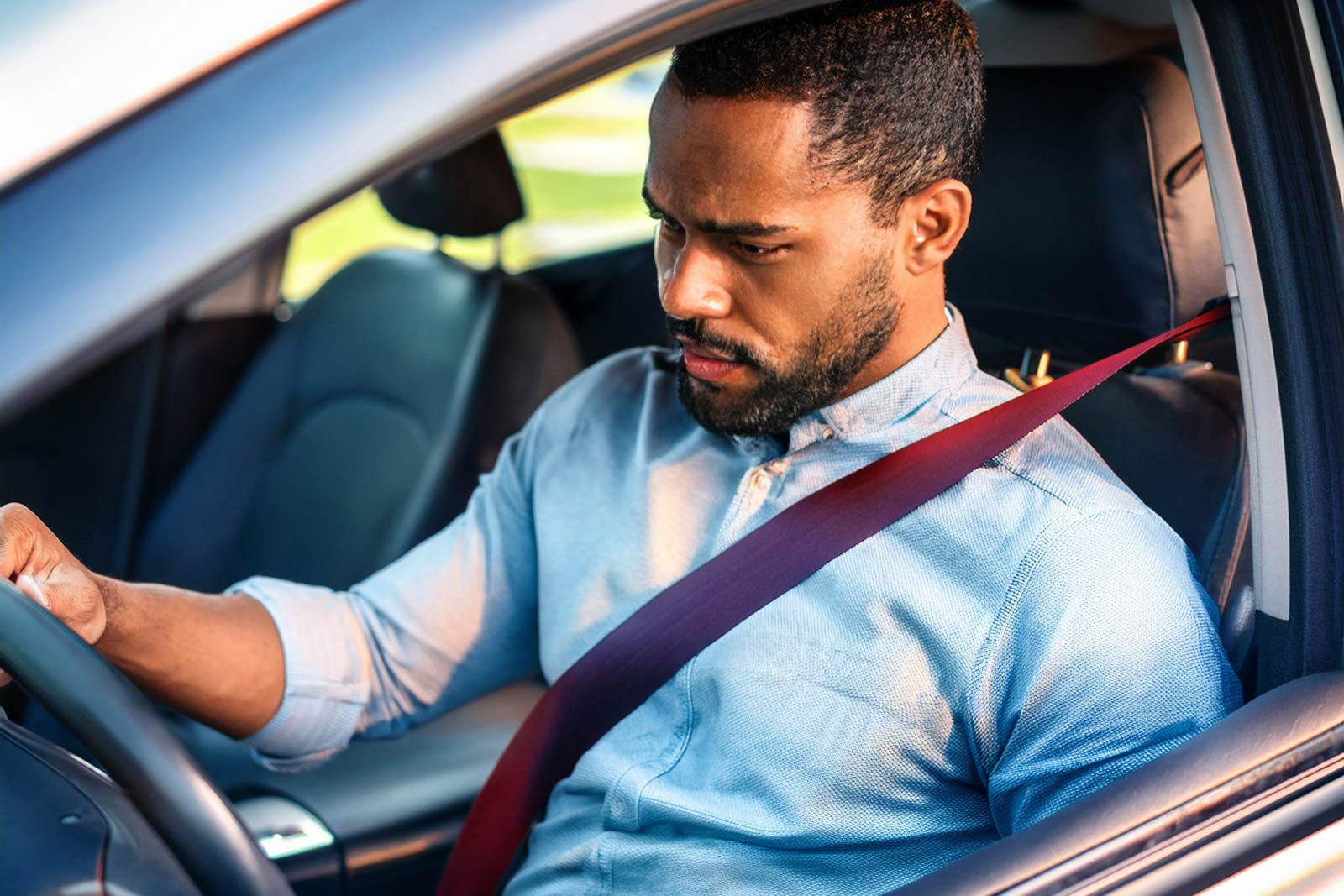
Seat belts save lives. There is no question about it.
By keeping occupants securely restrained during a collision, seat belts dramatically reduce the risk of severe injury and death. But while they protect you during a crash, they also transfer tremendous force through the chest and shoulder. As a result, some people experience injuries related to the impact forces transmitted by the seat belt.
Most people are familiar with the bruising or soreness that can develop where the seat belt crosses the body. However, some injuries are far less obvious. The force of a collision can damage muscles, ligaments, tendons, and even peripheral nerves that may be overlooked during an initial evaluation.
One example is injury to the medial pectoral nerve, a condition that may help explain lingering chest or shoulder symptoms after a motor vehicle accident.
How can a seat belt cause an injury?
During a collision, your body continues moving forward until the seat belt safely restrains you. That rapid deceleration places tremendous force across the areas where the seat belt contacts your body, particularly the chest and shoulder.
While this restraint is essential for preventing life-threatening injuries, the surrounding tissues still absorb significant stress. Depending on the severity and mechanics of the crash, this can result in injuries such as:
- Bruising across the chest or shoulder
- Chest wall pain
- Rib injuries
- Muscle strains
- Shoulder injuries
- Ligament or tendon damage
- Peripheral nerve injuries
Every collision is different. The direction of impact, speed of the vehicles, body position, and how the seat belt fits can all influence the types of injuries that occur.
What is the medial pectoral nerve?
The medial pectoral nerve is one of several nerves that supply the muscles of the chest, including portions of the pectoralis major muscle. This muscle plays an important role in movements such as pushing, lifting, and bringing the arm across the body. Although injuries involving this nerve are considered uncommon, they may be more frequent than previously recognized because they can closely resemble more common shoulder or neck conditions.
At RES Physical Medicine & Rehabilitation, our physicians specialize in diagnosing and treating injuries related to motor vehicle accidents and have recently identified patients with findings consistent with medial pectoral nerve injury following rear-end collisions. In these cases, the injury mechanism appeared to be related to the forces transmitted through the seat belt during impact. Because this pattern is not widely recognized, it can be missed unless the provider specifically considers it during the evaluation.
Symptoms can look like other common injuries
One of the challenges with medial pectoral nerve injury is that the symptoms often overlap with other conditions frequently seen after a car accident.
Patients may experience:
- Pain in the chest, shoulder, or underarm
- Weakness when pushing or lifting
- Difficulty performing certain arm movements
- Persistent discomfort that doesn’t improve as expected
- Visible muscle loss or atrophy over time in the lower portion of the chest
These symptoms can resemble conditions such as:
- Rotator cuff injuries
- Whiplash-related pain
- Cervical radiculopathy (pinched nerves in the neck)
- Muscle strains
- Brachial plexus injuries
Without a thorough evaluation, the true source of the symptoms may remain undiagnosed.
Why some nerve injuries are overlooked
Diagnosing peripheral nerve injuries requires more than simply reviewing imaging or treating the area where pain is felt. A comprehensive evaluation begins with understanding exactly how the collision occurred. The direction of impact, seat belt positioning, patient symptoms, and physical examination findings all provide important clues that help guide further testing.
Even specialized electrodiagnostic studies are only as effective as the areas being examined. If the affected muscle or nerve pathway is not specifically evaluated, important findings may be missed. That is why careful history-taking, a detailed physical examination, and appropriately targeted diagnostic testing are essential when evaluating patients after a motor vehicle collision.
Sometimes the diagnosis is not hidden—it simply requires knowing where to look. That’s where experience matters. RES providers specialize in diagnosing and treating injuries related to motor vehicle accidents, including those that may be overlooked during an initial evaluation.
Looking beyond the obvious
Motor vehicle collisions can produce injuries that are not immediately visible on routine imaging studies or during an initial emergency department visit. While fractures and major structural injuries often receive immediate attention, smaller soft tissue and nerve injuries may take days or even weeks to become apparent.
Patients are sometimes told that everything looks “normal,” yet they continue experiencing pain, weakness, or functional limitations. Rather than assuming those symptoms will resolve on their own, it’s important to determine whether an underlying injury has gone unrecognized.
At RES Physical Medicine & Rehabilitation, every patient receives a comprehensive evaluation designed to identify the true source of their symptoms, not simply treat the pain. As specialists in diagnosing and treating motor vehicle accident-related injuries, RES providers carefully consider the biomechanics of each collision, perform detailed physical examinations, and utilize advanced diagnostic testing when appropriate to ensure injuries are accurately identified and documented.
When should you seek a comprehensive evaluation?
After any motor vehicle collision, it’s important to seek medical attention if you experience:
- Pain that persists beyond several days
- Weakness in the shoulder, chest, or arm
- Numbness or tingling
- Difficulty lifting or pushing
- Symptoms that continue despite treatment
- Noticeable changes in muscle size or appearance
Even if you’ve already been evaluated elsewhere, persistent or unexplained symptoms deserve a closer look. Identifying the correct diagnosis is the first step toward developing an effective treatment plan and supporting your recovery.
The bottom line
Seat belts remain one of the most important safety features ever developed for motor vehicles and should always be worn. However, surviving a collision doesn’t always mean walking away without injury. While many seat belt-related injuries heal with time, others, including certain peripheral nerve injuries, can be more difficult to recognize and require a comprehensive evaluation.
If you’ve been involved in a motor vehicle accident and continue to experience unexplained pain, weakness, or other lingering symptoms, don’t wait to seek care. Call or text RES at 716.630.0000 or fill out the form below, as soon as possible to ensure your injuries are properly assessed and your recovery starts on the right path.